Post image for Is Laser Hair Replacement Effective?

In recent years, laser hair replacement therapy has become a method for the treatment and replacement of lost or thinning hair.  This is just another technique for the devastating emotional and physical effects that people endure when they are dealing with this particular issue.  It laser therapy has shown to have proven results where hair replacement is concerned as well as the thickening of thinning hair in balding areas of a person’s scalp.  However, certain individuals experience better results than others.

How does laser hair replacement work?

This particular technique for the replacement of lost and thinning hair works by using strips of tissue donated from other scalp areas where hair growth is still normal and the follicles are shown to be DHT resistant and located towards the rear of the scalp.  The hair from these areas can also be used for hair replacement on other areas of the body.  Additionally, there is literally no risk of these follicles dying and/or falling out.  Typically, the laser punctures small holes in the scalp area being treated and the donor hairs are transplanted by virtue of a robotic arm.

Post operative care

Once the laser hair replacement procedure has been completed, you will need to exercise extra caution with your newly transplanted hair.  Chances are, your physician is going to tell you not to touch it or scratch it and be especially careful that you do not bump your head in order to avoid damaging the transplants as well as inhibiting the growth process.  If you follow your surgeon’s instructions, than your procedure will have successful results.

Additional post-operative care

The new hairs will start to fall out about two weeks after the laser hair replacement procedure has been performed.  This is due primarily to shock loss and is completely normal.  Additionally, it is now safe to touch your hair and the area where it was transplanted without running the risk of damaging the follicles.  You should start to notice that new hair is growing and within 2 to 3 months, the transplants will be growing with your existing hair.

The end result is that the aftermath of this replacement surgery will no longer be noticeable.  Just be aware that you may experience some side effects such as itching, pain, and swelling.  However, your hair replacement surgeon will prescribe certain medications to help you deal with this.  There will also be some scabbing, but this should subside within a matter of a few days.

Post image for Hormonal Hair Replacement Therapy

As we age, some of us experience hair loss or thinning of the hair.  However, when it gets severe or highly noticeable, we often turn our thoughts to some type of hair replacement procedure to correct this.  In many instances, the replacement of lost or thinning hair results from hormonal changes that happen to both men and women as a result of the aging process.  As a result, hormonal hair replacement therapy has become a recent option for people who are experiencing this.

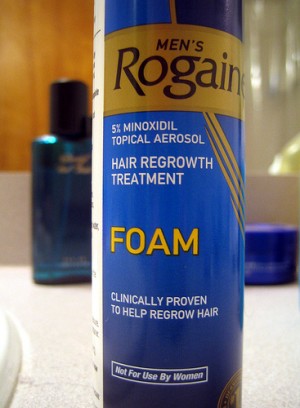
Although it is a recent development where hair replacement methods are concerned, hormone replacement therapy is nothing new and in many instances synthetic hormones have been employed in order to offset hormone imbalance.  In recent years, the use of topicals such as Rogaine or taking prescription medications such as Propecia has shown positive results for the treatment of male pattern baldness.  However, they will only work as long as you are maintaining the regimen.

One of the more recent hair replacement techniques that was developed by Dr. John Lee is bioidentical hormone replacement therapy.  He demonstrated how progesterone cream derived from plants metabolized in the body as if it were normal amounts of progesterone.  This oftentimes results in a balancing of other bodily hormones when applied to the body in the form of a cream and absorbed through the pores of the skin.

It has been hypothesized that genetic baldness may result in part due to the conversion of testosterone being converted into DHT or Dihydrotestosterone.  DHT attacks the hair follicles by causing a waxy substance buildup at the roots which eventually begins choking the follicle.  DHEA or dehydroepiandrosterone can minimize the effect that DHT has on the hair and act as a hair replacement therapy.  Today, you can purchase DHEA online or over the counter.

Some men have benefited from the replacement of testosterone.  However, DHEA is capable of converting to either estrogen or testosterone.  According to the Life Extension Foundation, the body basically selects which one of these hormones it needs and then proceeds to use it as needed.  Women need to be careful when ingesting testosterone as it can cause excessive body hair growth and a lowering of the voice.  It should only be taken if your physician prescribes it.

Since their can be other reasons that cause the loss or thinning of hair, bioidentical hormone hair replacement therapy may not always be the best option.  Your physician or healthcare provider should make that decision and determine the proper course of action to ensure your safety and well-being.

Photo via advanced_hair_studio

Post image for What You Can Expect After Hair Replacement Transplant Surgery

After you have undergone hair replacement transplant surgery, there are recovery stages that follow on the way to successful results.  There will probably side effects involved with most replacement and transplant surgeries, but within a few months, your hair will look normal and there should be no evidence of having had the procedure done.  The following is what you can expect after you have had a hair replacement transplant procedure performed.

Early side effects

Initially, you should expect to feel some numbness, pain, redness, soreness, swelling, and tightness on the areas where the hair replacement transplantation was conducted.  These should start to subside within a few days of the surgery and your surgeon will probably prescribe some medication that will make this a little easier on you.

After the end of the first week

In most cases, you should no longer be experiencing the side effects mentioned above after the first week has passed.  Redness and swelling are typically gone.  However, in rare instances, there may still be some noticeable numbness.  At this time, your surgeon will remove the first batch of staples or sutures, depending on what was used.

After the second week

By the time two weeks have passed, the surgeon should remove the remainder of the staples or sutures.  By now, you should no longer be experiencing any numbness either.  Technically, the hair replacement grafts should be completely situated and taking hold.

Appearance of the hair

Somewhere around the first or second week, you should start noticing some new hair growth.  After the first 30 days, any reminders of the transplant should no longer exist and your hair and scalp should appear natural looking.  Once you have reached the 4 to 5 month mark, everything should appear normal and you should be noticing new hair growth in all the areas that your hair replacement surgery took place.

Final results stage

The overall process of hair replacement surgery takes up to a year to complete.  By the 12th month, all the results that are going to materialize will have taken place.  At this point in time, you will have a consultation with your surgeon again to see the final results and to determine if further treatment is required.  Remember above all else that you need to follow your physician’s orders to the letter and take whatever medication that they ordered exactly as directed.  In so doing, you should be completely satisfied with the results and be able to continue leading a normal life.

Photo via advanced_hair_studio

Post image for What Are The Advantages And Disadvantages Of Hair Replacement Surgery?

Hair transplant surgery has been a viable hair replacement procedure dating back to the 1950’s when the procedure was first performed, much to the chagrin of the skeptics of that day.  This replacement technique is effective in the restoration of lost or thinning follicles and is now one of the more popular hair replacement options available on the market today.  Just remember that this is a surgical procedure and that your body may not always respond positively.  There can be certain advantages or disadvantages that you need to be aware of before undergoing the procedure.

The cost of the procedure – although the costs involved with hair replacement surgery has declined considerably, prices will range from between $3 to $8 per hair graft.  It may take up to 70 of these grafts per square centimeter of scalp area involved.  However, a skilled surgeon can achieve positive results with as few as 50 grafts.  So it follows that it may cost up to $10,000 to transplant 25 square centimeters of scalp area.  Fortunately, some physicians that perform the procedure do offer financing so you do not have to pay a lump sum out of pocket.

Other options available – although the initial investment for hair replacement surgery seems quite costly, over the long run, they are far more cost-effective than other hair systems or replacement techniques on the market.  The higher quality hair systems can cost up to $5,000 and require a lot of maintenance compared to transplant surgery.  With annual grooming and reattachment procedures totaling an additional $500, you could easily pay in the neighborhood of $20,000 over a 10-year period.

Results of the surgical procedure – for the most parts, positive results are witnessed about 70% or more with patients that choose this type of hair replacement procedure.  So they are not completely guaranteed.  Additionally, side effects such as infections can arise along with pain and swelling while some of the transplants may die during the process.  As you age, there is a greater chance of thinning and if this occurs in the original donor area, you could be left with an unsightly bald patch.

Final considerations – remember that not every individual is going to be a good candidate for hair replacement surgical procedures.  If you do not have sufficient donor hair to effect positive results, your physician or surgeon will not perform the procedure.  In most cases, your specialist may advise you to consider other options if you are less than 30 years of age.

Photo via Talking Tree

Post image for The Psychological Impact Of Hair Replacement And Hair Loss

To say the least, the loss or thinning of one’s hair can be a traumatic experience and many people turn to different hair replacement techniques, non-surgical and surgical alike.  Although millions of men and women deal with this issue every year, they are seldom prepared for the psychological impact that can and oftentimes does result.  Because of the fact that our hair frames our faces, hair replacement is oftentimes considered because that “frame” begins to disappear.

There are numerous reasons, genetic or otherwise, that necessitate hair replacement procedures or techniques to overcome the emotional and psychological impact of this malady.  One of these procedures involves the use of replacement systems such as hairpieces, toupees, or wigs.  Unfortunately, there is a greater chance that the psychological impact will be worse when using these techniques to replace lost or thinning hair.

Although there have been a number of advancements and innovations in the area of hair replacement systems, most individuals feel that they do not look as natural as the re-growth of hair that occurs when using Rogaine or taking Propecia or having transplant surgery performed.  The psychological impact arises from the fact that people who use a “system” rather than medication or surgery oftentimes fear that others will judge them and think that they are being vain.

The whole issue where hair replacement is concerned is that it is not a matter of vanity.  It is a matter of feeling like you are a whole person again.  Remember that family members and friends will notice the fact that you look like once did and accept you no matter what because they are not shallow individuals.  Although these hair systems appear to be much more cost-effective initially compared to surgical procedures, over the long haul, the grooming and maintenance of a hair system could actually cost you double what transplantation or other surgical procedures could cost you.

On a positive note, the higher end hair replacement systems do appear to be more natural looking compared to the cheaper ones.  The better systems are colored and cut to blend in with your existing hair so it is more undetectable.  Usually, a special adhesive is employed in order to attach the hair system to your scalp.  Typically, it is not uncomfortable and is usually water resistant.  Your hair is kept in place for weeks at a time before needing to re-adhere it.

Photo via tamelyn
Post image for The Disadvantages Involved With Laser Hair Replacement Surgery

Although laser hair replacement surgery is one of the more recent techniques to become available where the replacement of lost and thinning hair is concerned, it is gaining in popularity all the time.  The procedure helps to eliminate the frustration and grief involved with hair loss.  However, there are still a few disadvantages or downsides to this type of hair replacement surgery that you need to be aware of if you have been considering this surgical procedure as an option.

Cost factors – even the low end laser hair replacement surgeries can cost between $2,000 and $3,000.  However, these costs can easily balloon to up to 4 times this amount.  Another downside is the fact that unless your hair loss resulted from an accident or a medical condition, most insurance will not cover the cost of the surgery.  On a positive note, there are a number of specialists who now offer financing so that you do not incur a large lump sum out of pocket cost.

Pain – it is not uncommon for an individual to experience noticeable pain resulting from hair replacement procedures.  Prior to your surgery, they will administer an anesthetic but you will most likely experience some pain once the anesthetic wears off.  There may also be some itching and pain associated with the scabbing that follows the surgery during the healing period.

Skin color issues – even though skin color is taken into consideration prior to the surgery, problems involving different coloration can occur.  Lighter or darker skin areas that do not match the original color of the scalp may result which can be a problem for individuals with darker or tanned skin.  However, burning of the skin during laser hair replacement surgery rarely happens because so many precautions are now taken to prevent this from happening during the procedure.

Success rates – for the most part, laser hair replacement surgery has a decent success rate despite the fact that it is not guaranteed with all types of individuals.  Sometimes the surgery results in circulatory flow issues which will impede and even stop the re-growth of hair.  In a few rare cases, it was noted that the surgery resulted in an artificial or unnatural appearance once the healing process was complete.  In most instances, the surgeon will advise you to avoid direct sunlight for the first 2 to 3 weeks after the procedure for this exact reason.

Photo via advanced_hair_studio

Post image for Women can use Rogaine for Hair Replacement

A word about Rogaine

The different hair replacement procedures and techniques available are not reserved exclusively for men.  Women have also benefited from the numerous replacement methods and techniques that are available today, both non-surgical and surgical.  For instance, there is a Rogaine hair replacement formula for women, which is slightly different in formulation from that of the man’s product.  The active ingredient in Rogaine is Minoxidil which is an FDA-approved substance and is the only chemical ingredient that has proven to re-grow hair.

Using Rogaine properly

As with any chemical or medication, there are certain precautions you need to take when using them, namely how to use them properly in order to avoid complications.  First and foremost, women should only use a 2% Rogaine formula that is prescribed for women only.  Men have the option of a 2% or a 5% formula, the latter needing to be prescribed by a physician.  You should only use 1ml in the morning and then 1ml at night.  You want to make sure that you always part the hair so that you can apply the dose to the area of the scalp where you want the hair replacement to take effect.

You want to make sure that you gently massage Rogaine into the scalp.  If you have just shampooed your hair, you want to make sure that you wait until the hair is totally dry before applying Rogaine.  Additionally, you never want to use more than the amount that is recommended since the chemical ingredient can be absorbed into your blood stream.  Just be aware of the fact that it may take up to a year before you start seeing any noticeable results.

The precautions and side effects involved with using Rogaine

Fortunately, there have been very few side effects experienced by women when they are using Rogaine for hair replacement purposes, provided you use the product properly.  Here is what you need to know:

Your scalp could become dry and itchy – if this happens, rinsing your hair with cool water may help.  Make sure that you use a gentler shampoo for washing your hair

If you are pregnant DO NOT use Rogaine – additionally, do not use it if you are breast feeding your infant

DO NOT use other medications on your scalp when you are using Rogaine – this can cause the Minoxidil to be absorbed by the blood stream which can result in circulatory and heart problems.

Photo via Cuba Gallery

Post image for How long does hair replacement (transplant) surgery normally take?

A brief word about hair transplantation surgery

For men and women alike, transplant surgery has become a very effective and popular procedure for hair replacement.  Whether male or female, the loss or thinning of hair can be emotionally devastating and many people today have pursued a number of different replacement methods or procedures to correct their condition.  However, the key difference between these other hair replacement methods and transplant surgery is that the former can take months or even years before the results are noticeable.

During this procedure, healthy hair is removed from the back of the head and then transplanted to the front of the scalp where the loss or thinning normally occurs.  With men, the back and the sides of the scalp become replacement donor areas and the follicles in this area are referred to as donor dominant hair since it continually grows throughout the course of the person’s life.  Additionally, transplantation surgery usually does not halt or reduce the growth cycle of the follicles.

How long does the surgery last?

It is difficult to pinpoint an answer to this question as the length of time involved will vary from one individual to the next as well as from one surgeon to another.  If the surgeon needs to perform hair replacement surgery over a large area of the scalp, the procedure can last up to 12 hours.  If it is only a small area in question or a section by section procedure, the surgery could be completed in as little as 2 to 4 hours for each section of the scalp involved.

In addition to this, if the hair replacement surgery is conducted on a section by section basis, there could be numerous follow-up procedures involved over a period of several weeks.  Where heavy hair loss and thinning is concerned, the replacement procedure could take several months in order to complete the entire process.  Again, remember that no two individuals are alike where this issue is concerned and the extent of the loss or thinning will determine how lengthy the entire process may or may not be.

Other options that are non-surgical in nature

On a closing note, if you are unwilling to undergo hair replacement surgical procedures, there are a couple of non-surgical options that you may benefit from such as taking Propecia or applying Rogaine to the balding scalp areas.  However, these could take months or even years to show signs of noticeable results.

Photo via Cuba Gallery

Post image for Aftercare Instructions for Hair Replacement Surgery Patients

Whenever you are considering having a hair replacement procedure done such as transplant surgery, your goal is always the achievement of optimum results.  If this is your goal, there are certain post-operative instructions or procedures that you should follow whenever possible.  Normally, your hair replacement surgeon will give you a list of these instructions to follow once the replacement of your lost or thinning hair has been completed.

The first step to taking care of your scalp after hair replacement surgery

Typically, the first thing a hair replacement surgeon will advise you to do is to make sure that you sleep with your head resting on pillows.  If it is necessary, they will prescribe medications for the pain and so you can get a decent night’s sleep.  Additionally, there will be a headband put in place to protect the transplanted hair after the replacement surgery has been completed.  You can remove it the next morning after you wake up.

You want to make sure that you that you shampoo your “new” hair about every 4 hours that first day after the replacement surgery.  After the first day, this will no longer be necessary.  The shampooing “rules” will change and the surgeon will typically call you to see how you are doing.

The second step

Once you have followed the shampooing instructions for the first day after the hair replacement procedure has been completed, you will probably be instructed to shower and wash your hair twice daily.  Your surgeon will typically provide you with a shampoo that they recommend for their patients in order to clean the scalp areas where the transplants were done.

There is no need to worry about the hair implants falling out when shampooing because the transplanted follicles are placed snuggly into the scalp.  These will not fall out when you are showering and washing your hair.  Additionally, if all procedures after the surgery are followed in proper fashion, there will be no reason to wear any of those surgical bandages that may be used from time to time.  After about 2 weeks, you should be able to resume your normal hair care routine.

What you need to avoid

DO NOT consume any alcohol for 3 days after the hair replacement surgery has been performed.  Smoking may be prohibited for up to 2 weeks as well, so if you’re a smoker, prepare yourself for this.  Finally, if you are going to spend time out in bright sunlight, you should be wearing a hat.

Photo via hegarty_david

Post image for Where hair replacement is concerned, you get what you pay for.

Although it’s a cliché that has been overused, hair replacement is no different from anything else that you purchase in that you get what you pay for.  The procedures they employ for the replacement of lost or thinning hair is far different today compared to what it was in years gone by.  The technology has advanced exponentially and there are numerous hair replacement options available on the market today.  For some of us, we are still haunted by memories of bad hairpieces, toupees, and wigs.

Despite the embarrassment you may have suffered in the past, you’ll be relieved to know that there are numerous options available, both non-surgical and surgical, so that you do not have to rely on a hair replacement “system” ever again.  Interestingly enough, these systems were not the least expensive options nor were they the most expensive.  Depending on you level of insurance coverage, non-surgical products such as Propecia (a prescription medication) and Rogaine (a topical ingredient) are typically less expensive than hair systems and surgical replacement procedures.

Of the non-surgical options available, only Propecia and Rogaine are the only hair replacement products that have shown positive results in research studies.  The scary part is that there are dozens of these on the market now, all of which advertise that they are miracle cures to baldness.  Unfortunately, the two mentioned above are the only ones with clinically proven results.  The bottom line is that you want to be careful with what product you spend your money on.

There are two types of Rogaine for men and women, both of which are different based on physiological differences in gender.  There is a 2% solution that you can purchase over the counter and there is a 5% solution that requires a physician’s prescription.  Propecia is strictly a prescription medication and there are no OTC versions of this.  One way or the other, there is a greater likelihood that these two will have positive effects provided that the hair loss or thinning is not severe.

Despite these findings, they are not consistent as no two individuals are alike and they can be prescribed for different reasons such as an alternative to a surgical hair replacement procedure or in conjunction with one.  In any event, your best decision is to consult with a hair replacement physician or surgeon to determine the best course of action to pursue.

Photo via churl

 
Copyright © 2012. All Rights Reserved. HairReplacement.org


Terms and Conditions | Privacy Policy