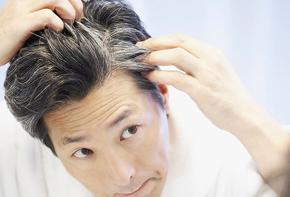
Most experts in the field of hair replacement procedures and technology will typically divide the process into three distinct stages. These are the replacement pre-operative, surgical, and post-operative stages. Each stage has its own unique characteristics and there are certain steps that need to be taken and procedures to follow where your hair is involved. The following should give you some basic information on these different stages of the entire hair replacement process from start to finish.
Pre-operative period
During this stage of the hair replacement process, you will consult with an experienced surgeon who will evaluate the condition of your scalp and determine the particular surgical procedure to use. They will also be able to decide how many sessions will be necessary in order to complete the procedure.
If you have been applying a topical such as Rogaine, or taking a medication such as Propecia to combat your hair loss, the surgeon will probably want you to stop doing this within a couple of weeks of the procedure being performed. Additionally, the surgeon may prescribe some pre-operative antibiotics to stave off infections resulting from the surgical wounds.
Surgical period
Depending on the hair replacement surgery that is performed, you may need mild sedation or be injected with a topical anesthetic, the effects of which lasts for about 4 hours. Prior to the procedure, your scalp will be shampooed and then an antibacterial chemical will be applied in order to treat the areas of the scalp involved in the surgery (i.e. the donor and recipient areas). The procedure is then performed and the surgeon will most likely be able to determine how many more procedures will be necessary in order to complete the entire process.
Post-operative period
There have been numerous advances in the area of wound care and semi-permeable dressings are usually applied and changed daily in order to deal with blood and tissue fluid seepage. You will have to protect your scalp from the sun and cannot start shampooing the hair until 2 or 3 days after the hair replacement procedure was performed. Shampooing is important as it helps to prevent scabbing around the hair follicle shafts.
Remember that “shock loss” is going to occur within the first 10 days of the hair replacement surgery and the transplanted hairs will fall out. This is normal and by the third month after the surgery, re-growth should be in full swing.