Any time you are considering hair replacement surgery in order to correct conditions such as Alopecia or pattern baldness, you want to consider the risks as well as the benefits of having the procedure performed. The replacement of lost or thinning hair through surgical procedures such as scalp-reduction or transplantation has become extremely popular over the past couple of decades. The time to ask questions as well as determining all the benefits and risks of hair replacement surgery is during your initial consultation with the surgeon who is performing the procedure.
The benefits of hair replacement surgery
For the most part, the benefits of any surgical hair replacement procedure far outweigh the risks encountered. There are two primary benefits that most surgeons will tell you during the initial consultation with them:
Improvement of one’s appearance – this is the most evident benefit of the two in that it provides the patient with a natural and youthful appearance. These factors can positively impact business and other social interactions. Typically, hair loss, premature or normal tends to make the person appear to be older than what they actually are.
Improvement of one’s self esteem – this is especially true where women and hair replacement surgery are concerned as they are more prone to societal pressure regarding their appearance and just looking good no matter where they are. Self esteem improves for men and women alike whenever one of these procedures are performed and are successful after the process has been completed. Gaining a more youthful look is one of the ideal methods for feeling better about oneself and appearance.
Risks and side effects of hair replacement surgery
No matter what type of surgery is being performed, there are always some inherent risks involved. Hair replacement surgery is no exception to that rule. This is especially true during the post-surgical healing stage.
Post-surgical pain – although this is relatively common, it is brief in duration and hair replacement surgeons typically prescribe painkillers to offset this.
Infection – patients occasionally experience infections with some surgical procedures but again, your surgeon will most likely prescribe an antibiotic to prevent this and keep a more severe condition from occurring.
Scabbing – this is a very common occurrence but is brief in duration as scabs are usually non-evident after 10-14 days.
Low survival rate of transplanted hair – some transplanted follicles will not survive and fall out after hair replacement surgery, but it is usually minimal in nature.
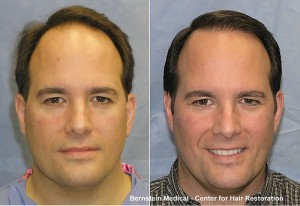
Photo via robertbernsteinmd